

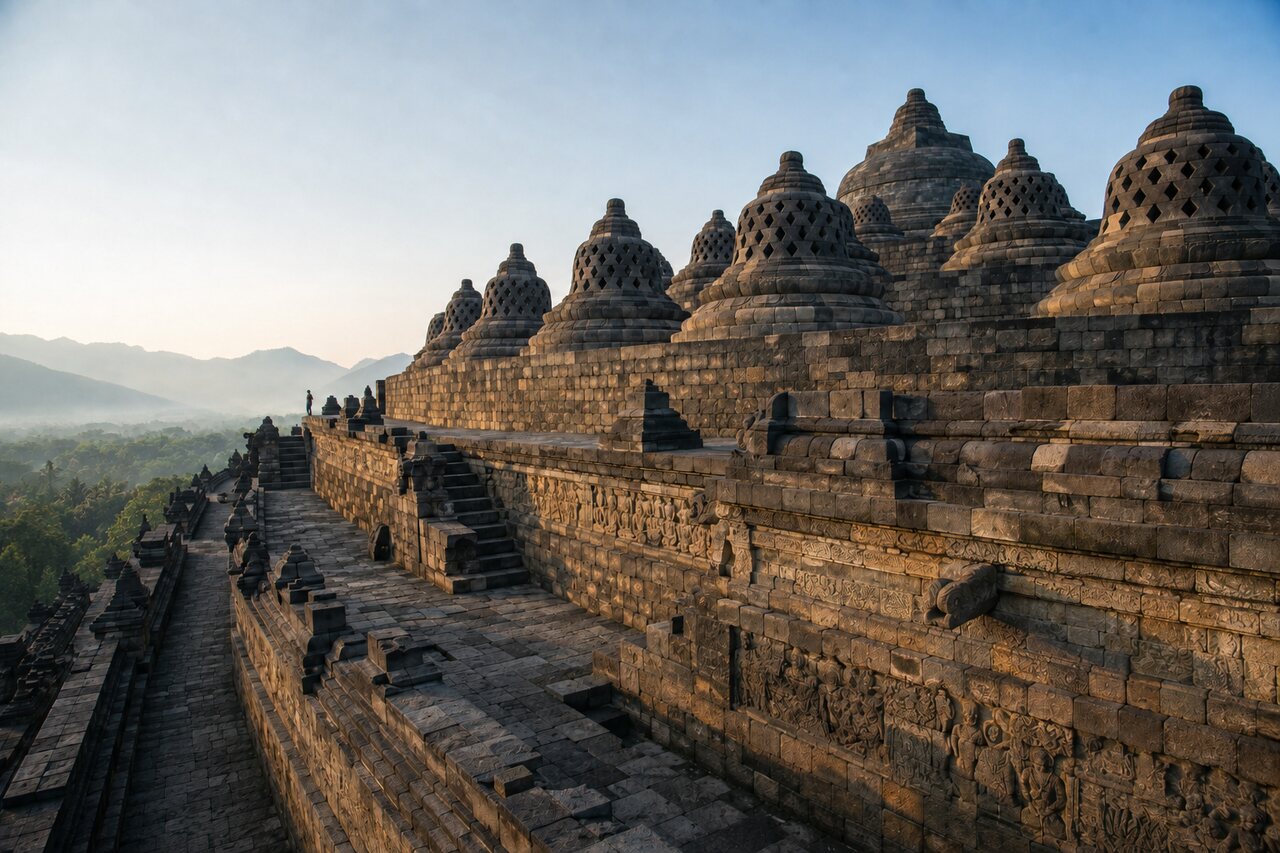
A Borobudur Ancient Architecture Facts guide reveals the remarkable knowledge, creativity, and engineering skills behind one of Indonesia’s greatest historical monuments. Borobudur represents a unique combination of Buddhist philosophy, traditional architecture, and advanced construction techniques from ancient Java.
Borobudur attracts travelers because of its impressive appearance and cultural significance. However, the architectural details behind the monument reveal a much deeper story about human creativity and historical achievement.
For travelers aged 25 and above, understanding these facts creates a more meaningful visit. Learning about Borobudur’s construction helps visitors appreciate the monument beyond its visual beauty.
The Origin of Borobudur Architecture
The Borobudur Ancient Architecture Facts begin with its construction during the Sailendra Dynasty around the 8th and 9th centuries.
Ancient builders created Borobudur as a Mahayana Buddhist monument in Central Java. The design followed Buddhist cosmology and represented a spiritual journey toward enlightenment.
The monument was built using thousands of volcanic stone blocks arranged carefully without modern construction equipment.
Furthermore, the builders created a detailed plan that combined religious symbolism with architectural balance.
Travelers can explore more about Borobudur’s architecture, structure, and spiritual meaning through this complete guide to Borobudur inside structure, reliefs, and spiritual meaning.
Millions of Stones Without Modern Technology
One of the most impressive Borobudur architecture facts is its construction method.
Ancient craftsmen arranged millions of andesite stones to create the massive monument. The stones were shaped and placed carefully to form strong walls, terraces, and stupas.
The builders used an advanced interlocking system that helped maintain structural stability.
Moreover, the precision of the construction shows the high level of engineering knowledge possessed by ancient Javanese civilizations.
Borobudur’s Mandala Design
Borobudur follows the concept of a Buddhist mandala.
The monument was designed with a symmetrical layout that represents the universe according to Buddhist philosophy.
The structure consists of three main sections: Kamadhatu, Rupadhatu, and Arupadhatu.
Each section has a different meaning and represents a stage of spiritual development.
This combination of architecture and philosophy makes Borobudur different from many other historical monuments.
Advanced Water Management System
Another fascinating fact about Borobudur is its ancient drainage system.
The monument includes stone channels, water outlets, and hidden pathways designed to control rainfall.
This system helped protect the structure from water damage in a tropical environment.
The existence of this technology demonstrates the builders’ understanding of environmental conditions.
The Function of Stupas and Reliefs
The stupas are important architectural elements of Borobudur.
The upper terraces contain seventy-two small stupas surrounding the central dome. These structures symbolize spiritual achievement and enlightenment.
Meanwhile, the relief panels serve as visual storytelling elements.
The carvings describe Buddhist teachings, moral lessons, and scenes from ancient Javanese life.
Together, stupas and reliefs create a connection between architecture, religion, and education.
Preservation of an Ancient Masterpiece
Over centuries, Borobudur experienced challenges from weather, volcanic activity, and natural erosion.
However, restoration programs have helped preserve the monument’s structure and historical value.
Today, visitors can admire Borobudur because of continuous conservation efforts.
Experience Borobudur Through Historical Discovery
Understanding Borobudur’s architecture makes every visit more meaningful.
A local guide can explain the engineering techniques, symbolism, and historical background behind the monument.
Travelers who want a comfortable cultural journey can explore private Yogyakarta tours with local guides and customized travel plans.
Discover the Architectural Genius of Borobudur
A Borobudur Ancient Architecture Facts journey reveals how ancient builders created a monument that combines science, art, and spirituality.
Borobudur remains a symbol of human creativity and one of the world’s most extraordinary heritage achievements.
Plan your Yogyakarta adventure and discover the incredible architectural wonders of Borobudur Temple.
