

The Borobudur inner structure is an important part of understanding how this ancient Buddhist monument was designed. Unlike conventional buildings with enclosed rooms, Borobudur is experienced through its terraces, galleries, stairways, platforms, stupas, and central monument.
The structure creates a carefully organized route that guides visitors upward through different architectural levels. Each section contributes to the monument’s artistic, cultural, and spiritual character.
Understanding the Basic Structure
Borobudur was constructed in Central Java during the eighth and ninth centuries. The monument consists of multiple levels arranged around a central vertical axis.
The lower section contains five square terraces. Above these are three circular platforms, followed by the large central stupa at the summit.
This arrangement creates a gradual transition from detailed architectural spaces to more open areas. Visitors can experience this change as they climb from one level to another.
For travelers who want a broader explanation of the monument’s structure and meaning, this Borobudur inside guide provides additional information.
The Square Terraces
The square terraces form a major part of the Borobudur inner structure. Each level contains pathways surrounded by stone walls and balustrades.
Visitors follow these galleries while moving around the monument. The walls contain numerous relief panels that form an important part of Borobudur’s artistic heritage.
The terraces also contain niches with Buddha statues. Their placement contributes to the visual rhythm of the monument as visitors progress through the different levels.
Stairways Connect Each Level
Stairways are essential to Borobudur’s design. Four main stairways connect the different sides of the monument and allow visitors to move toward the upper levels.
The stairways also reinforce the monument’s symmetrical layout. From the lower terraces, visitors can see how the pathways, walls, and architectural elements are arranged around the central axis.
Moving upward through these stairways creates a physical sense of progression.
Relief Galleries and Structural Walls
Another important feature of the Borobudur inner structure is the relationship between its galleries and relief-covered walls.
The reliefs are integrated directly into the architecture rather than displayed separately. As visitors walk around each terrace, they encounter carved scenes along the walls.
This arrangement means that the architecture itself becomes part of the storytelling experience. The visitor moves through the narrative instead of observing it from a single location.
Transition to the Circular Platforms
The structure changes significantly after the square terraces. Visitors eventually reach three circular platforms.
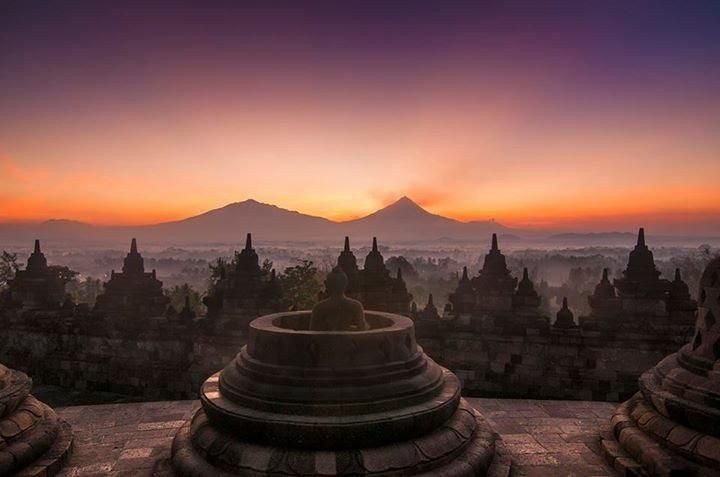
These platforms contain perforated stupas arranged around the central stupa. The open layout creates a visual contrast with the more enclosed galleries below.
This transition is one of the defining characteristics of Borobudur. The monument gradually becomes simpler and more open as visitors move toward its summit.
Perforated Stupas
The circular platforms contain numerous perforated stupas. Their stone lattice patterns allow visitors to see Buddha statues positioned inside.
The arrangement of these stupas creates a repeating architectural pattern across the upper levels.
Their circular placement also emphasizes the central position of the main stupa. Together, these elements create a balanced composition when viewed from above or from the surrounding platforms.
The Central Stupa
The central stupa forms the highest point of Borobudur. It is larger and visually simpler than the surrounding perforated stupas.
Its position provides a strong focal point for the entire structure. The central location also reinforces the monument’s symmetrical organization.
The relationship between the central stupa and surrounding platforms demonstrates how carefully the monument’s vertical and horizontal elements were planned.
Symbolism in the Structure
The Borobudur inner structure is closely connected to Buddhist cosmology. The monument is commonly understood through three broad symbolic zones: Kamadhatu, Rupadhatu, and Arupadhatu.
These levels represent different stages within Buddhist thought. The architectural transition from detailed lower areas toward the simpler upper platforms reflects this symbolic organization.
As visitors climb, the physical structure therefore becomes part of a larger spiritual journey.
Exploring Borobudur
Travelers should allow enough time to explore each architectural level. Looking closely at the reliefs and statues can reveal details that are easy to miss when moving quickly.
Comfortable footwear is recommended because visiting the monument involves walking and climbing multiple levels.
For travelers planning a wider cultural journey through Central Java, Borobudur Tours can also be considered when arranging an itinerary.
Discover the Design of Borobudur
The Borobudur inner structure demonstrates how architecture, sculpture, reliefs, and Buddhist symbolism can be combined into one monumental design. Its square terraces, stairways, circular platforms, stupas, and central monument create a carefully organized journey.
Understanding these structural elements can make a visit more meaningful and help travelers appreciate Borobudur as both an architectural achievement and an important Buddhist heritage site.
