

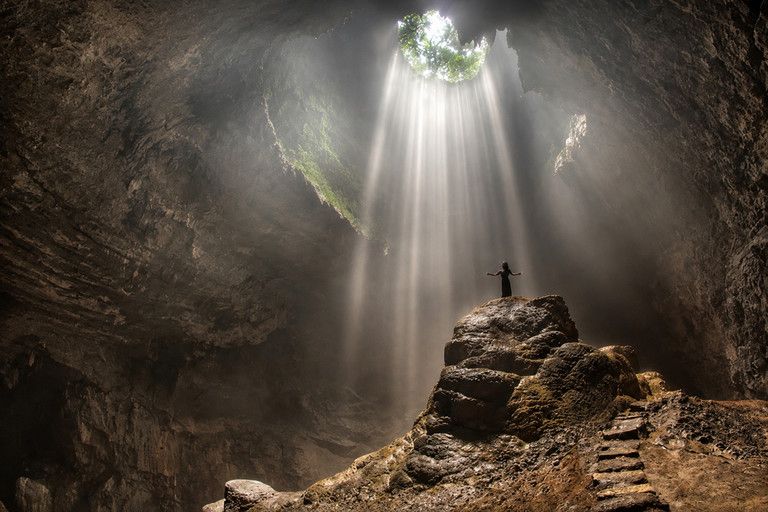
Yogyakarta offers diverse landscapes for travelers who enjoy photography. The region features volcanic mountains, green rice fields, ancient temples, forests, beaches, and traditional villages. These natural and cultural elements create many opportunities for impressive landscape compositions.
Yogyakarta landscape photography can suit both beginners and experienced photographers. You can capture wide mountain views, peaceful countryside, dramatic coastlines, and historic landmarks. Each destination offers a different atmosphere, especially when you visit at the right time of day.
Riyadi’s Spot for Panoramic Views
Riyadi’s Spot offers a wide view across the countryside around Prambanan. From the elevated viewpoint, photographers can capture Prambanan Temple, Mount Merapi, rice fields, and nearby villages.
Morning often provides soft light and atmospheric conditions. You can use the surrounding landscape as foreground elements and place Prambanan in the distance.
Try both wide-angle and telephoto compositions. Each lens can create a different sense of scale.
Punthuk Setumbu for Mountain Landscapes
Punthuk Setumbu provides an elevated view near Borobudur. The viewpoint overlooks hills, villages, and mountains surrounding the temple area.
Early morning offers excellent conditions for landscape photography. Mist can sometimes appear across the valleys and add atmosphere to the scene.
Arrive before sunrise to prepare your equipment. A tripod can help when you photograph in low light.
Prambanan for Cultural Landscapes
Prambanan Temple adds a strong cultural element to landscape photography. The tall temple structures contrast with the surrounding green landscape.
Use the temple as the main subject and include trees or open fields around it. This approach can show the relationship between the historic site and its environment.
Late afternoon can also create warm light across the temple complex. Check the site’s photography rules before setting up equipment.
Puncak Becici for Forest Scenery
Puncak Becici offers a peaceful landscape filled with tall pine trees. The elevated location also provides views across the surrounding hills.
The trees can create natural leading lines that guide the viewer through the photograph. Morning light can filter through the branches and create interesting patterns.
Walk around different viewpoints to find compositions with varying depths. A wide lens works well for larger forest scenes.
Parangtritis for Coastal Landscapes
Parangtritis Beach provides a dramatic contrast to Yogyakarta’s inland scenery. The broad shoreline, waves, sand, and open horizon create simple landscape compositions.
Sunset offers warm colors and long shadows across the beach. You can photograph silhouettes, waves, footprints, and distant figures.
Try a low camera angle to include details in the sand. This technique can add depth to wide coastal photographs.
Kalibiru for Green Hill Views
Kalibiru sits among the Menoreh Hills and overlooks green valleys and Sermo Reservoir. The elevated viewpoints provide broad landscape compositions.
The combination of forest, hills, and water creates layers within a photograph. You can use these layers to give your images more depth.
Visit during clear weather for wider views. Cloudy conditions can also create a dramatic atmosphere across the hills.
Tips for Landscape Photography
Good preparation can improve your results. Check the weather forecast before visiting outdoor locations. Arrive early when you want to capture sunrise or morning mist.
Bring a tripod, spare batteries, and enough storage. A wide-angle lens can help capture expansive scenery, while a telephoto lens works well for distant subjects.
For travelers who want to visit several scenic locations efficiently, Borobudur Tours can help arrange transportation and sightseeing around Yogyakarta.
Yogyakarta offers many landscapes for creative photography. From mountains and forests to temples and beaches, the region provides diverse scenery for photographers to explore.
