

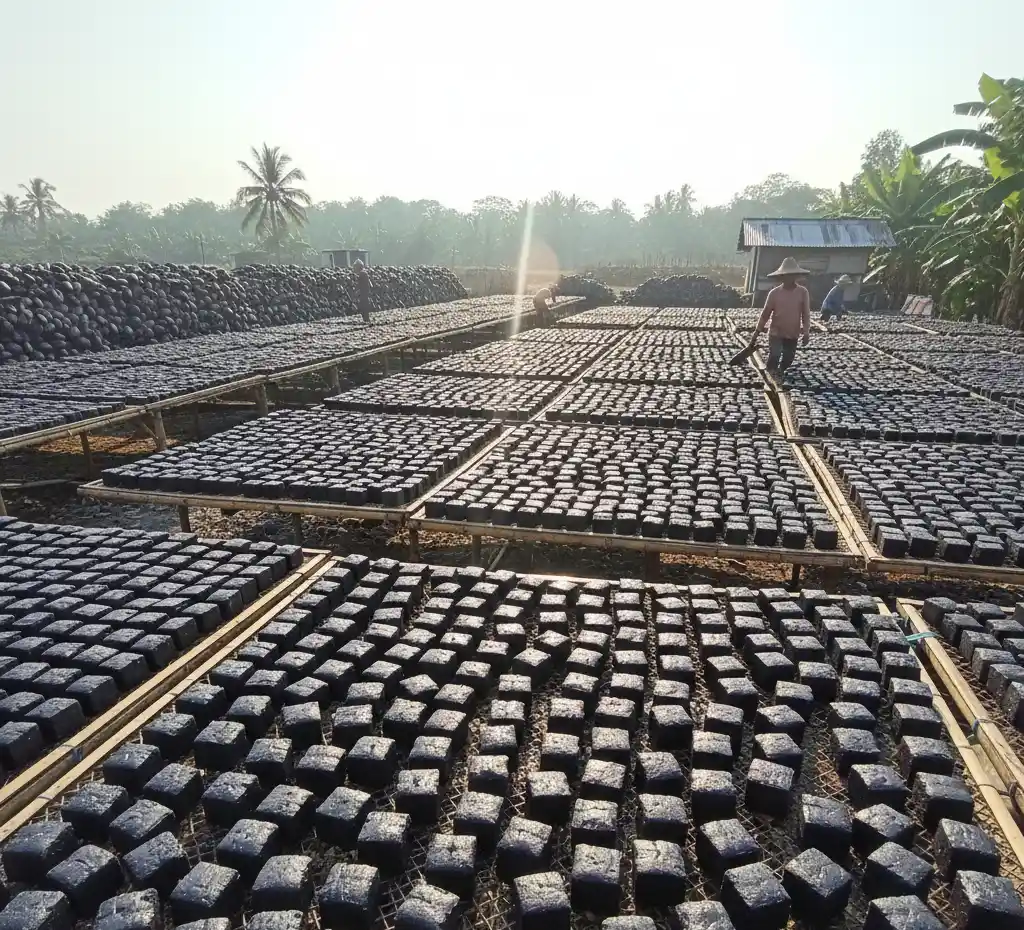
Understanding how to determine ideal drying time for coconut charcoal briquettes is essential for maintaining product quality and combustion performance. For a deeper explanation of production standards and drying benchmarks, readers can explore the main article, Ideal Drying Time for High-Quality Coconut Charcoal Briquettes, which outlines key technical considerations. Additional practical insights about small-scale production, efficiency, and business opportunities can also be found on the homepage of bisnisbergaransi.com, which provides useful references for beginners and producers.
Importance of the Drying Process
Drying is a critical stage in the briquette production process because it directly affects durability, ignition, and burn stability. Briquettes that retain excess moisture tend to produce more smoke, burn unevenly, and break easily during handling. Proper drying ensures the briquettes maintain their shape, density, and performance during storage and use.
Moisture Content as the Main Indicator
Several factors influence the ideal drying time. One of the most important is moisture content. Freshly molded coconut charcoal briquettes usually contain a significant amount of water from the mixing process. Drying aims to reduce this moisture to a stable level so the briquettes can ignite easily and burn consistently.
Environmental Conditions and Drying Speed
Environmental conditions also play a major role. Sunlight exposure, air circulation, temperature, and humidity determine how quickly moisture evaporates. In sunny and dry conditions, briquettes may dry within one to three days. In more humid environments, the process can take longer and requires better ventilation or additional drying methods.
Briquette Size and Thickness
The thickness and size of the briquettes should also be considered. Larger or denser briquettes retain moisture longer than smaller ones. Uniform shapes help ensure consistent drying, preventing some pieces from remaining damp while others become overly dry.
Signs of Properly Dried Briquettes
Producers can use simple indicators to determine whether drying is complete. Properly dried briquettes feel lighter, harder, and less fragile. They produce a clear sound when tapped and show minimal surface moisture. If the briquettes still feel soft or crumble easily, additional drying time is needed.
Drying Methods for Different Production Scales
Drying methods can vary depending on production scale. Sun drying is commonly used for home and small-scale production because it is cost-effective and simple. However, controlled drying using racks, covered spaces, or drying ovens can provide more consistent results, especially during rainy seasons.
Monitoring During the Drying Process
Monitoring is important throughout the process. Turning the briquettes periodically helps ensure even exposure to air and heat. This reduces the risk of uneven drying, mold formation, or structural damage.
Balancing Time and Quality
Determining the ideal drying time is not only about speed but also about maintaining quality. Overdrying can make briquettes too brittle, while insufficient drying leads to poor combustion and storage problems. Balancing time, environment, and material characteristics is key to achieving the best results.
Conclusion
In conclusion, understanding how to determine ideal drying time for coconut charcoal briquettes involves observing moisture levels, environmental conditions, briquette size, and drying methods. With careful monitoring and proper techniques, producers can ensure their briquettes burn efficiently, remain durable, and meet quality expectations for both household and commercial use.
